Subscription Fatigue Is Real. Credits Are an Exit Route.
Flat monthly plans fit badly when usage varies wildly between customers. Credit-based billing lets people pay for what they use without another recurring commitment.
By cred.diy Team

Most people now pay for more software subscriptions than they use. Every renewal is a small decision — "do I still need this?" — and each one is a chance to cancel. For AI-powered apps the problem is sharper: someone signs up, tries the product a few times, and has to decide whether occasional use justifies another fixed monthly line item.
If your usage is uneven, a flat subscription asks every customer to pay the same price for very different amounts of value. Credits remove that mismatch.
The subscription trap
A flat subscription assumes every customer gets roughly the same value each month. That assumption holds for a static dashboard. It doesn't hold for AI agents and automations.
One customer might run three automations a week; another might trigger three hundred. A price that covers the heavy user is too expensive for the light one. A price that appeals to the light user loses money on the heavy one.
So the price ends up either:
- Too high for low-usage customers, who leave, or
- Too low for high-usage customers, who eat your margin.
Why credits fit variable usage
Credit-based billing decouples payment from time. Instead of charging the same amount every month whether or not the customer shows up, you sell a block of credits. They spend it at their own pace and top up when they run low. A month without use costs them nothing.
That changes the decision the customer faces:
- A visible balance: credits they've bought are something they can see and use, not a charge that recurs regardless.
- No renewal decision: there's no "do I still need this?" moment every 30 days.
- Price follows use: heavy users pay more, light users aren't over-charged.
Whether this improves conversion or retention for your product is something to measure, not assume. Run both models side by side on comparable traffic and compare paid conversion and repeat purchases before switching everyone.
What a credit migration looks like
Switching doesn't mean rebuilding billing from scratch. cred.diy keeps the ledger and balances and runs the checkout. You make three decisions:
1. Define the credit unit
Pick a stable reference point. One option is to tie a credit to a small slice of your internal cost, such as "1 credit = $0.001 of compute". That leaves room to price cheap actions without fractions and to mark up expensive ones.
2. Map features to costs
Not every action costs the same. A short summarization might be 1 credit; a multi-step agent run that calls a large model, browses the web and writes to a database might be 50. Publish the table so customers can predict spend before they start.
3. Set package sizes
Offer larger packs at a lower price per credit — for example, 1,000 credits for $10 and 12,000 for $100. The numbers are yours to choose; the point is that committed customers get a better rate without signing an annual contract. You define the packages as pricing tiers, and cred.diy's hosted checkout sells them through Stripe.
If some customers prefer a predictable monthly charge, you can offer both: a credit subscription that adds credits after each paid invoice, plus one-off top-ups. See hybrid credit billing.
Common objections
"Revenue becomes lumpy."
It can. Purchases follow usage rather than the calendar. If predictable revenue matters, offer a monthly credit subscription alongside one-off packs, or auto top-up from a saved card.
"Customers won't top up."
They're more likely to if they can see the balance and aren't surprised by running out. Show the balance in your app, warn before it runs low, and make topping up one click. The balance is a single API call, so you can show it next to the actions that spend it.
"It's too complex to implement."
With a ledger that already exists, the core is small: issue credits on purchase or signup, deduct them when a feature is used, and refund when something fails. No proration or invoice logic for the prepaid case.
The takeaway
Subscriptions aren't going away, and for steady usage they still fit. But when usage varies a lot between customers, a flat monthly price is a blunt instrument. Credits let price follow value.
Set up your first credit type and test a usage-based option alongside your current plan.
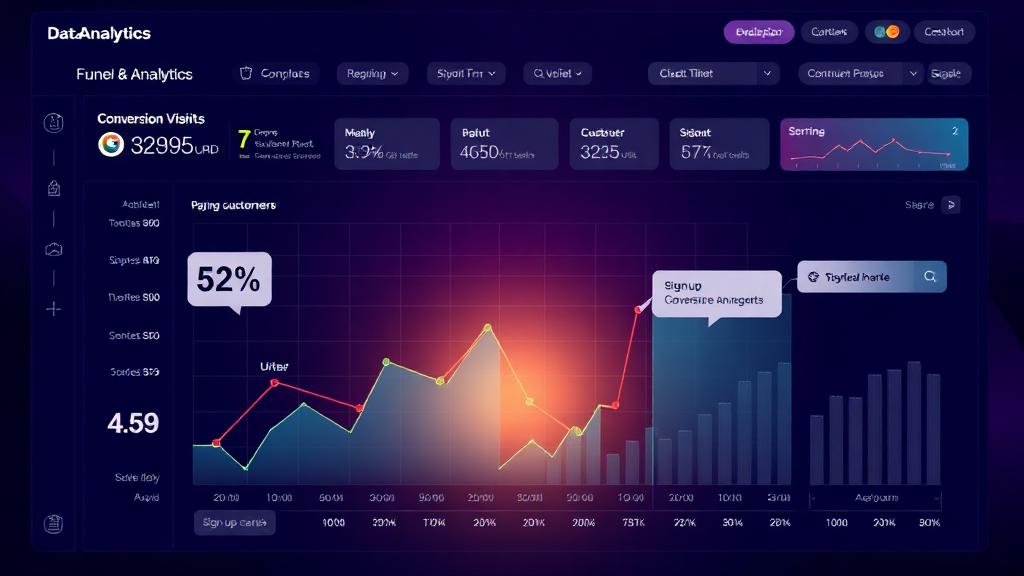
Track Which Signups Actually Pay: Signup URL and Credit-Type Attribution
Knowing your top traffic sources isn't enough. Recording the signup URL and the credit type each user claimed shows which channels and offers bring paying customers.

Running Presales and Token Launches with cred.diy
A complete guide to running presale campaigns that let early adopters purchase credits before your product launches.